In case of a broken mainboard and the replacement of the mainboard is necessary then we always recommend to use the MSA tool and the procedure from the board replacement wizard even if you don't have any connection with the old mainboard.
If you don't use the MSA and the board replacement wizard you will not be able to communicate with the MSA and the machine because there will be no serial number installed in the mainboard, the MSA will give you a "check serial number" error.
The below procedure is a workaround to be able to configure the mainboard in the correct way with the PRM file:
1) Start the MSA with no LAN cable connected. In the tab "Setup" select "option" and select the correct printer type with the following LAN setting 192.168.1.253.
2) Start the board replacement wizard from the MSA with still no LAN cable connected, click 'next' until you receive the question "have the board replaced with the alternate board".
3) Start the printer (with the new mainboard installed) in board manager mode and connect the LAN cable. Press the "Yes" button to confirm that the new mainboard has been installed.
4) you will be able to choose the correct Firmware version for installation, after the firmware is installed on the mainboard, the MSA will ask to restart the printer in board manager mode to load the firmware on the mainboard.
5) After the firmware is loaded and the printer has been restarted in board manager mode, next step will be to load the ".prm" file from the printer into the new mainboard(see note).
Note:
Situation 1: in case you use the PRM file from the printer than you don't need to follow any steps anymore all parameters will be load with the help of the PRM file taken from the broken mainboard, We still recommend to check the head rank number and correct it if necessary.
Situation 2:
in case you used a original PRM file received from Mutoh Europe( step 7 until 9 needs also to be performed).
|
6) Once the procedure is finished switch off the printer and switch it on in User mode to load the firmware into the mainboard, this could take more than one minute (maybe 2) before initialization starts.
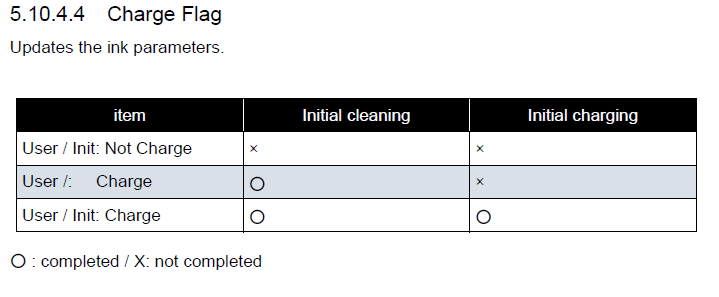
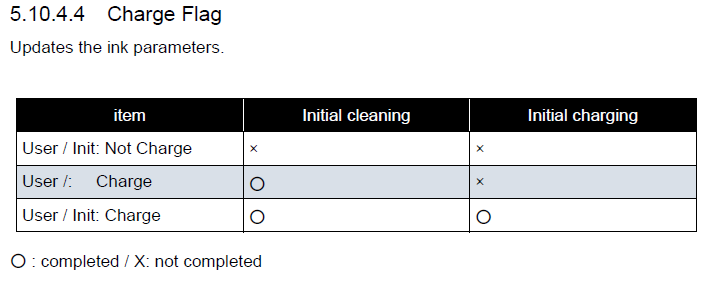
7) Switch off the printer and go to the menu parameter, update, Charge flag and select the correct configuration so that the machine doesn't ask to load inks.
8) Go to the menu "head replace" and correct the head rank number.
9) Go through all UNI-D and BI-D calibrations and recalibrate them if necessary.
The below procedure is a workaround to be able to configure the mainboard in the correct way without the PRM file:
1) Start the MSA with no LAN cable connected. In the tab "Setup" select "option" and select the correct printer type with the following LAN setting 192.168.1.253.
2) Start the board replacement wizard from the MSA with still no LAN cable connected, click 'next' until you receive the question "have the board replaced with the alternate board".
3) Start the printer (with the new mainboard installed) in board manager mode and connect the LAN cable. Press the "Yes" button to confirm that the new mainboard has been installed.
4) you will be able to choose the correct Firmware version for installation, after the firmware is installed on the mainboard, the MSA will ask to restart the printer in board manager mode to load the firmware on the mainboard.
5) The next step can be skipped because there is no PRM file of the printer.
6) In the final step you will be able to enter the serial number of the printer manually.
7) Once the procedure is finished switch off the printer and switch it on in User mode to load the firmware into the mainboard, this could take more than one minute (maybe 2) before initialization starts.
8) Switch off the printer and switch it on in Diagnostic mode and enter all the needed parameters by hand with the help of the paper where all the parameters of the printer are present, this can be done in diagnostic, update.
9) go to the menu parameter, update, Charge flag and select the correct configuration so that the printer doesn't ask to load inks.
10) Check the head rank number and correct it if necessary.
11) Go through all UNI-D and BI-D calibrations and recalibrate them if necessary.